Magog Down

Woodland management

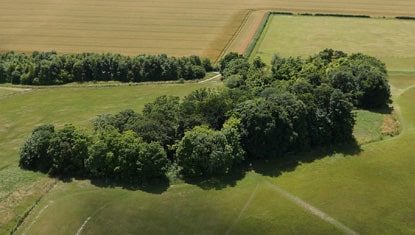
Twenty years ago when the Magog Downs were created the grand plan was to convert an area of farmland into a site that would be a haven for wildlife as well as an area that could be used by the public for quiet recreational activities. To this end a certain amount of landscape design was carried out which incorporated areas of woodland planting, the idea being that this would help create a greater variety of habitats and therefore increase the biodiversity and at the same time make the site more interesting for all users.

There were (and still are), one or two areas of more mature woodland but plans had to be made for replacement trees which would eventually take the place of the mature woodland. At this time Eric Winterflood got involved with the trust and his previous experience as a Forester with the Forestry Commission proved invaluable.

Eric decided that the best method of planting would be the traditional use of young (1 and 2 year old whips), planted at close spacingís which has been proven to get the best results as young trees are less affected by their removal and adapt very quickly to their new surroundings, the close spacing also helps encourage quick straight growth whilst suppressing the growth of weeds which are competitors for available nutrients.
However some losses were expected and it is not unusual to lose 10 ñ 20% of the trees planted, much greater than this and the whole area would be re-planted.

Eric was so successful in his choice of stock and planting that he in fact had a success rate of approximately 97%, whilst very good on the one hand it does mean that there comes a time when the trees need to be thinned in order to give more room for growth and slow down the rate of straight growth which could lead to the trees toppling due to a top heavy crown on a week spindly trunk.

The time for thinning has now arrived and ideally we need to reduce the tree cover by approximately 50% overall, however this needs to be done in stages in order not to have too great an impact on the areas of woodland visually and the wildlife within. It is also better for the trees because when grown close together they learn to depend on each other for stability and if too many trees are taken out the wind may have a tunnel effect and blow through the newly made gaps towards trees that have always relied on others to provide a wind break. By removing the trees gradually those which are left have the necessary time for their root systems to strengthen and adapt to the exposure.

Thinning will be carried out in a sympathetic manner which will not leave the woodlands looking too sparse, will help with a more natural method of tree removal leaving a variety of species, shapes and sizes, help with the creation of glades and provide improved cover for wildlife with the creation of an understory as all the trees are native species and will grow into coppice stools.

  • Magog0006_sheep.jpg
  • MagogDown_forageharvestin_040708 002.jpg
  • MagogDown_forageharvestin_040708 031.jpg
  • Magog_BeakedHawksbeard_May08.jpg
  • Magog_Down_May08_flower.jpg
  • Magog_Down_May08_sheep.jpg